


VPN Reviews · Privacy Explainer
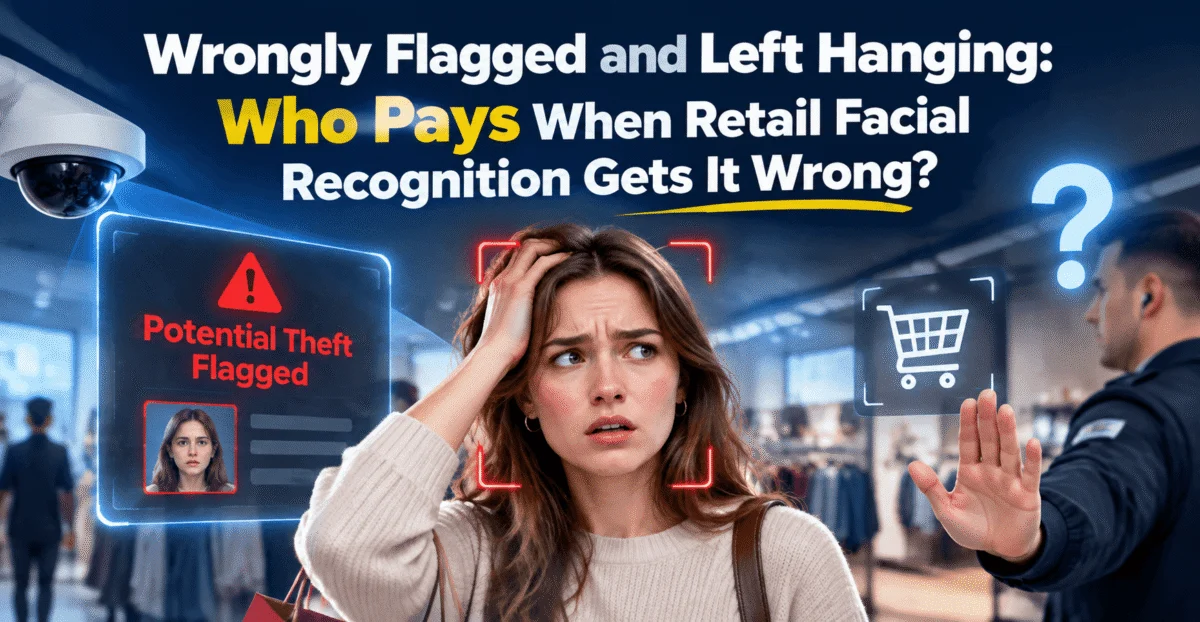
Picture this: you walk into a store you have shopped at for years, and a member of staff quietly asks you to leave. Nobody explains why. You are told only that a system flagged you. It is a scenario that has played out for real shoppers across the UK, and the aftermath, who answers for the error and how you clear your name, is proving as troubling as the mistake itself.
What you need to know
- A major newspaper investigation in 2026 documented shoppers wrongly flagged as thieves by retail facial recognition.
- Retailers, the technology vendor and staff on the shop floor each point to someone else when something goes wrong.
- A VPN does nothing to hide your face, so know your data-protection rights instead.
What the reports describe
Live facial recognition in shops, most prominently the Facewatch system used by a growing list of British retailers, compares faces at the door with a watchlist of people previously reported for theft. When it works, the retailer sees an alert. When it does not, an innocent customer can be searched, accused in public and banned. Campaigners at Big Brother Watch said in 2025 that more than 35 people had contacted them after being wrongly placed on watchlists, and the 2026 reporting suggests the problem has not gone away.
In one widely reported case, a supermarket paused its live scanners at a London branch after a regular customer was wrongly flagged and told to leave. The vendor said its software had issued a correct alert and that the failure lay in how staff acted on it. Critics counter that a tool producing such outcomes is not fit for a busy shop floor. Parliamentarians have now taken notice: affected shoppers recently met MP Dr Allison Gardner in the House of Commons, where she asked what proportionate redress exists and who can be held liable.
Why nobody owns the mistake
The system is a chain with three links: the technology company that makes the matching software, the retailer that deploys it, and the employee who confronts you. Each can plausibly say the fault sits elsewhere. The vendor blames the human response, the store blames the vendor’s alert, and the employee blames the instructions they were given. The shopper in the middle is left to prove a negative to people who have no obvious duty to listen.
A small error rate sounds reassuring until you multiply it by millions of weekly visitors.
Why small error rates still hurt
Vendors highlight accuracy figures that sound close to perfect. But accuracy at scale is a numbers game: when a chain serves millions of customers a week, even a tiny fraction of false alerts means real people are wrongly accused every day. The harm is also lopsided. A false alert costs the retailer a moment of inconvenience, while it can cost the shopper their dignity, their routine and their confidence to walk into a shop.
If you are wrongly flagged: practical steps
- Stay calm and ask questions. Ask which system produced the alert and who the data controller is.
- Write everything down while it is fresh: date, store, staff names, what was said and any witnesses.
- Make a data access request. In the UK you can ask a company for the personal data it holds about you, including whether you are on a watchlist.
- Ask for correction or removal in writing and keep copies of every reply.
- Escalate to the data protection regulator and consider support from a civil-liberties group if the company stalls.
Where VPNs fit, and where they do not
Readers often assume privacy tools cover every surveillance risk. They do not. A VPN protects your internet traffic from your internet provider and from snoops on public Wi-Fi. It has no power over a camera at a shop entrance. If you want to understand what a VPN is good at, see our 2026 VPN ranking. For physical-world surveillance, your tools are legal rights, transparency from retailers and political pressure.
Coedee verdict
Facial recognition may reduce some shop theft, but a technology that can brand innocent people as criminals needs clear accountability, a quick route to correction and meaningful redress. Until that exists, shoppers should know their rights and keep records.
This article is general information and not legal advice. Rights and procedures vary by country; speak with a qualified adviser about your own situation.